
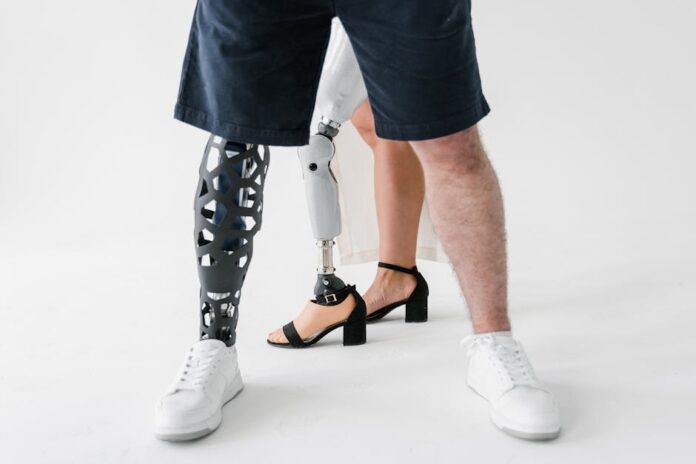
Paralysis can significantly impact mobility, but advancements in prosthetic technology offer renewed hope. Prosthetic legs provide individuals with paralysis the opportunity to regain independence and walk again. This article explores the design, functionality, and impact of prosthetic legs, highlighting their role in transforming lives and enabling greater participation in everyday activities. We will delve into how these devices restore movement and enhance the quality of life for those affected by paralysis.
Understanding Paralysis and the Need for Prosthetic Solutions:
Paralysis of the legs can manifest in various forms, each with distinct characteristics and underlying causes. Paraplegia refers to paralysis affecting both legs and the lower body, typically resulting from spinal cord injuries at the thoracic, lumbar, or sacral levels. Hemiplegia, on the other hand, involves paralysis of one side of the body, often stemming from stroke, traumatic brain injury, or other neurological conditions affecting one hemisphere of the brain. The severity and extent of paralysis can vary widely, depending on the location and completeness of the neurological damage.
The impact of leg paralysis on mobility and daily life is profound. Individuals with paralysis often face significant challenges in performing basic activities such as walking, standing, and transferring. This loss of mobility can lead to reduced independence, social isolation, and a diminished quality of life. Simple tasks that were once taken for granted, such as climbing stairs, navigating uneven terrain, or participating in recreational activities, may become difficult or impossible.
Prosthetic legs offer a potential solution for restoring ambulation and independence to individuals with leg paralysis. By providing external support and enabling weight-bearing, prosthetic legs can help individuals regain the ability to stand, walk, and engage in a wider range of activities. However, the process of adapting to prosthetic legs after paralysis is not without its challenges. Initial considerations include assessing the individual’s overall health, muscle strength, and balance, as well as addressing any pre-existing medical conditions.
Physical therapy and rehabilitation play a crucial role in preparing individuals for prosthetic leg use. Through targeted exercises and training programs, therapists help strengthen residual muscles, improve balance and coordination, and teach individuals how to use assistive devices such as walkers or crutches. The rehabilitation process also involves learning how to properly don and doff the prosthetic leg, as well as how to care for the skin and prevent complications.
undefined
The Design and Functionality of Advanced Prosthetic Legs
Advanced prosthetic legs are sophisticated devices designed to restore mobility and mimic natural walking patterns for individuals with paralysis. These prosthetics comprise several key components, each playing a crucial role in functionality and user experience. The socket serves as the interface between the residual limb and the prosthetic, requiring a precise fit to ensure comfort, stability, and optimal control. Modern sockets often utilize advanced materials like carbon fiber composites and incorporate sophisticated designs that distribute pressure evenly, reducing the risk of skin irritation and discomfort.
The shank, or pylons, connects the socket to the foot and provides structural support. Materials like carbon fiber and titanium are favored for their high strength-to-weight ratios, contributing to a lightweight yet durable prosthetic. The knee joint is a critical component, especially for above-knee amputees. Prosthetic knees range from simple mechanical hinges to advanced microprocessor-controlled systems. Mechanical knees offer basic stability, while microprocessor knees use sensors and sophisticated algorithms to detect changes in walking speed, cadence, and terrain. This allows for real-time adjustments in resistance and stability, enabling a more natural and energy-efficient gait.
The foot is designed to mimic the complex biomechanics of the human foot. Advanced prosthetic feet incorporate features like energy storage and return, allowing the user to propel themselves forward with each step. Materials like carbon fiber are commonly used to achieve this dynamic response.
Advancements in sensor technology and computer algorithms have revolutionized prosthetic leg control and responsiveness. Embedded sensors can detect muscle activity, joint angles, and ground reaction forces, providing valuable data that is processed by sophisticated algorithms. These algorithms can then adjust the prosthetic’s behavior in real-time, optimizing stability, balance, and gait. By continuously learning and adapting to the user’s movements and the environment, these advanced designs allow individuals with paralysis to regain a greater sense of control and independence, facilitating more natural and fluid walking patterns that were previously unattainable.
undefined
Rehabilitation, Adaptation, and the Impact on Quality of Life
The journey to regaining mobility with a prosthetic leg after paralysis is a multifaceted process, demanding dedicated rehabilitation and adaptation. Physical therapy forms the cornerstone of this rehabilitation. Therapists guide individuals through exercises to strengthen residual limb muscles, improve balance, and enhance core stability. Gait training is crucial, teaching users to walk efficiently and safely with their prosthetic leg. This involves learning to distribute weight evenly, control prosthetic knee movements, and achieve a natural stride length.
Adapting to life with a prosthetic leg presents unique challenges. Balance and coordination are initially compromised, requiring focused training and assistive devices like parallel bars or walkers. Navigating varied terrains, such as stairs, ramps, and uneven surfaces, demands specific strategies and prosthetic adjustments. Learning to anticipate changes in terrain and adjust gait accordingly is essential for preventing falls and maintaining confidence.
The psychological and social benefits of regaining mobility through prosthetic technology are profound. Regaining the ability to walk independently fosters a sense of accomplishment, self-esteem, and control over one’s life. Increased mobility facilitates social engagement, allowing individuals to participate in activities they previously enjoyed and reconnect with their communities. This contributes to improved mental well-being, reduced feelings of isolation, and a renewed sense of purpose.
Numerous individuals with paralysis have demonstrated remarkable achievements with prosthetic legs. Consider the story of a young athlete who, after a spinal cord injury, initially felt his athletic pursuits were over. Through intensive rehabilitation and the use of a microprocessor-controlled prosthetic leg, he not only regained his ability to walk but also returned to competitive sports. His success exemplifies the potential for prosthetic technology to transform lives and empower individuals to overcome seemingly insurmountable challenges. Such stories highlight the transformative power of prosthetic legs in restoring mobility, independence, and overall quality of life.
undefined
Conclusions
Prosthetic legs represent a remarkable advancement in restoring mobility and independence for individuals with paralysis. By understanding the types of paralysis, the sophisticated design of prosthetic legs, and the importance of rehabilitation, we can appreciate the profound impact of this technology. These devices not only enable walking but also enhance the overall quality of life, fostering greater participation and renewed confidence. As technology continues to evolve, prosthetic legs promise even greater advancements in mobility and independence for those affected by paralysis.